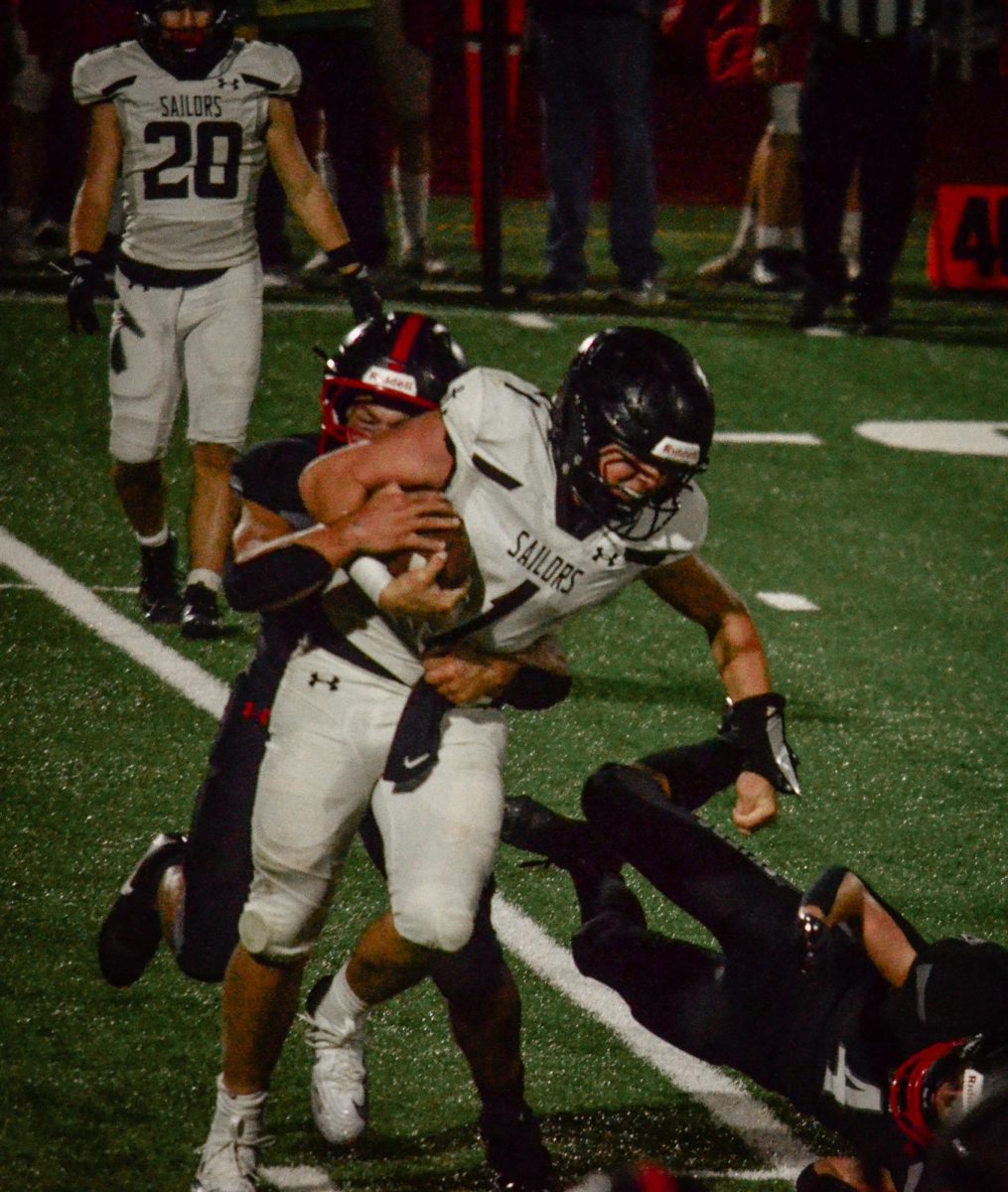
As athletes stand at the edge of the field ready to start a game, their hearts pound, the sound of whistles echoes through the stands, and they are left to overthink what is about to occur. On top of the expectations from coaches, fans, and teammates, the loudest voice is the one in an athlete’s own head. Athletes are trained to act quickly in response to unforeseen circumstances, but they often have to strike a psychological balance between preparing effectively and overthinking. Some athletes get psyched up, which motivates them to do well, while others get psyched out, which is the differentiation between successful and unsuccessful performance.
The concept of psyching oneself up refers to applying confidence, energy, and a positive mindset to elevate one’s performance. Instead of stressing about difficult situations, this technique is used as motivation to improve one’s execution.
Former NBA star Michael Jordan explains how he imagines himself scoring game-winning shots to reduce his fear of missing. The combination of visualization and muscle memory allowed him to destress before games and play to the fullest of his ability. When other athletes adopt strategies similar to this, it becomes easier for them to navigate intense situations stress-free.
On the other hand, psyching oneself out refers to the concept of overthinking scenarios to such a great extent that it hinders one’s ability to succeed. Factors such as time, pressure, and self-doubt come into play–and it becomes easy for one’s attitude to drastically shift. Often, opposing teams take advantage of this and put in effort to trigger this shift.
In football, “icing the kicker” refers to the act of calling a timeout immediately before the kicker is about to kick a field goal. This often occurs during intense moments of the game, so while players are already under stress due to close scores, the clock running down, or fans enraged in the stands, what once felt like muscle memory suddenly becomes tense and forgotten.
When psyching oneself out becomes severe, analysis paralysis sets in, making the process of decision-making even more difficult. This happens when athletes hyperfixate on small details and hypothetical outcomes from situations, stressing themselves out to the point that their ability to make decisions slows down or stops entirely. While brushing off previous training, these athletes gradually lose trust in themselves. After their mind takes over, it can lead to a decline in performance.
To avoid psyching yourself out or analysis paralysis, it’s important to establish consistency. Whether through pre-game routines or focusing on a specific goal, this habit can help the mind recognize when it is time to perform. Instead of making various technical adjustments at game time, it is better to focus on the overall picture. Perfectionism can be beneficial when practicing, as it allows you to refine your performance. However, when the lights are bright and the pressure is high, playing naturally is the best way to ensure success.
It is also necessary to trust muscle memory. Just as psyching oneself up relies on confidence and positive belief, athletes should allow their training to take over during games. Success in sports depends on more than physical skill, but on the mind’s ability to step back. During games, it is important to relax, let go, and trust yourself. There will always be time to review and break down details after the game, but in the moment, athletes will perform the strongest when they allow themselves to play naturally instead of analytically.