






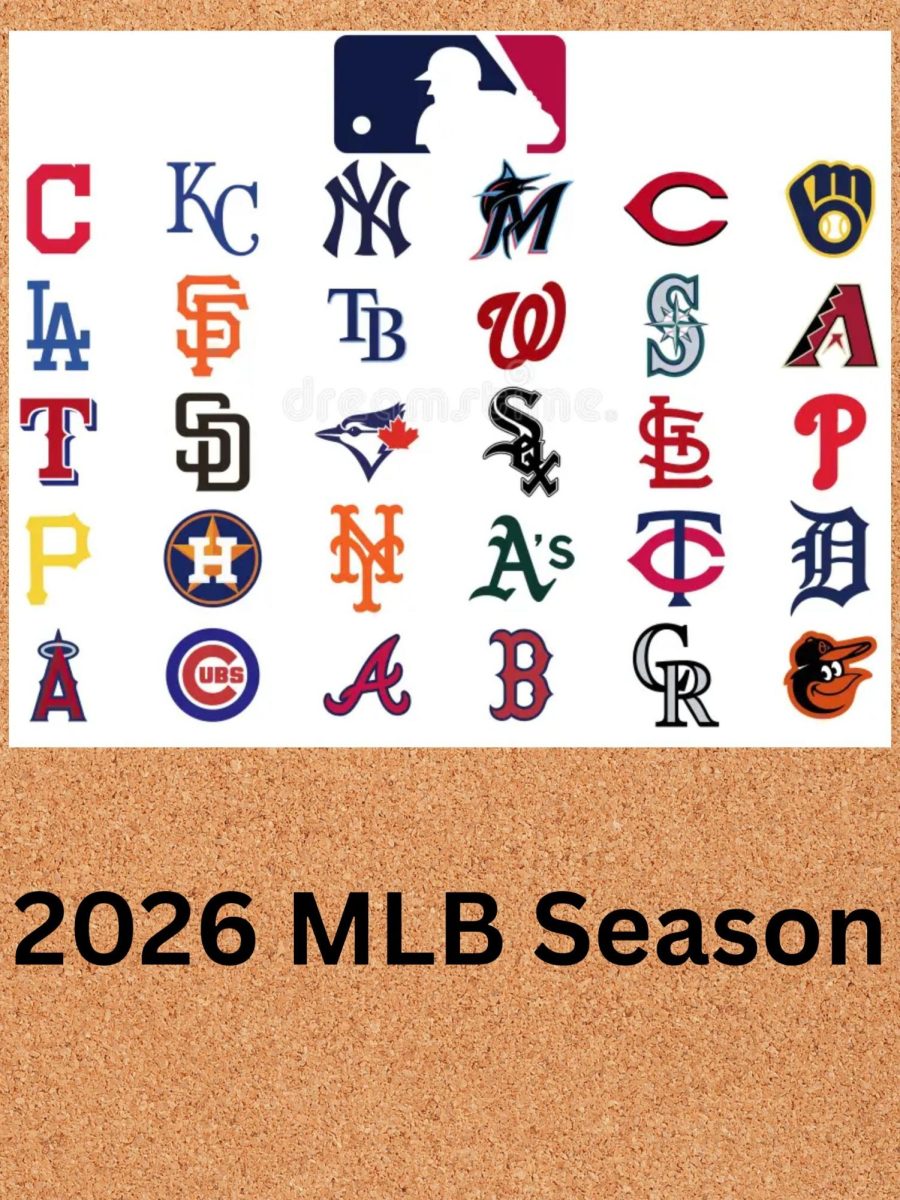



On Wednesday, March 25th, the MLB season kicked off with drastic changes from the old standards of the game. From new policies, superteams, and free agent signings, this season is destined for a completely new experience than any other season.
Over the summer, many major decisions made during free agency have changed the dynamics of teams. Free agency is a time during the offseason when players' contracts expire, and they can sign new contracts with new teams. The Baltimore Orioles signed a monumental five-year contract with first baseman Pete Alonso. The New York Mets also signed an important contract with shortstop Bo Bichette. Meanwhile, the Toronto Blue Jays signed Dylan Cease in a seven-year, $210 million contract. These moves have helped young teams transform into contenders, as well as helping balance the start studded team in the AL and NL East.
The season started on March 25th with an opening night game between the New York Yankees and the San Francisco Giants. The game was significant because it was the first regular-season game to stream globally on Netflix. Following this premiere, the rest of the league began play on March 26 and 27.
The Los Angeles Dodgers enter the 2026 season as the defending champions of the World Series. Last season was the Dodgers' second time in a row winning the World Series as they quest for a rare three-peat. After not losing many key players to free agency and signing key players such as Kyle Tucker and Edwin Diaz, they have a strong lineup to compete for a title for the 3rd year in a row.
Another new thing that the MLB has implemented is an Automated Ball Strike System (ABS). Rather than a fully automated system in which every pitch is called by a computer, MLB opted for a Challenge System to preserve the traditional role of the human umpire. Under this new protocol, each team starts a game with two challenges, which can be initiated by the pitcher, catcher, or hitter. Players can then signal a challenge immediately after an umpire's call, and a review is underway. The process is incredibly efficient, with a time of just under 14 seconds for a normal challenge. While the official rules define the strike zone as a 3D cube, ABS uses a 2D plane located at the midpoint of home plate. This was done to prevent unhittable breaking balls that hit the very back of the zone and are called strikes.
Another feature added is the Individualized Strike Zone. Every player’s height is measured in spring training while standing upright, with the top of the zone set at 53.5% of their height and the bottom at 27%. This new feature helps counter unfair pitching for taller and shorter players.
Before the regular season started, the 2026 World Baseball Classic served as a high-stakes introduction to the year. Games were held in San Juan, Houston, Tokyo, and Miami, where the tournament reached its climax. This is where the world’s best talent represents their home turf, further cementing baseball’s status as a premier global sport.
Looking ahead to the All-Star Game, all of the festivities of this event are headed to Citizens Bank Park, home of the Philadelphia Phillies. This event is planned to take place from July 11-14th, and is timed to coincide with the United States 250th anniversary celebrations in the city. Beyond the game itself, fans are excited for the Home Run Derby and the new MLBx, a 3-on-3 knockout competition featuring legends and rising stars.
As the 2026 season unfolds, MLB finds itself at a tough crossroads between tradition and transformation. Due to massive payroll shifts in free agency that have created super-teams, digital ABS systems and the attempt for a historic three-peat, this year's baseball season is destined for record-breaking performances and legendary moments.