













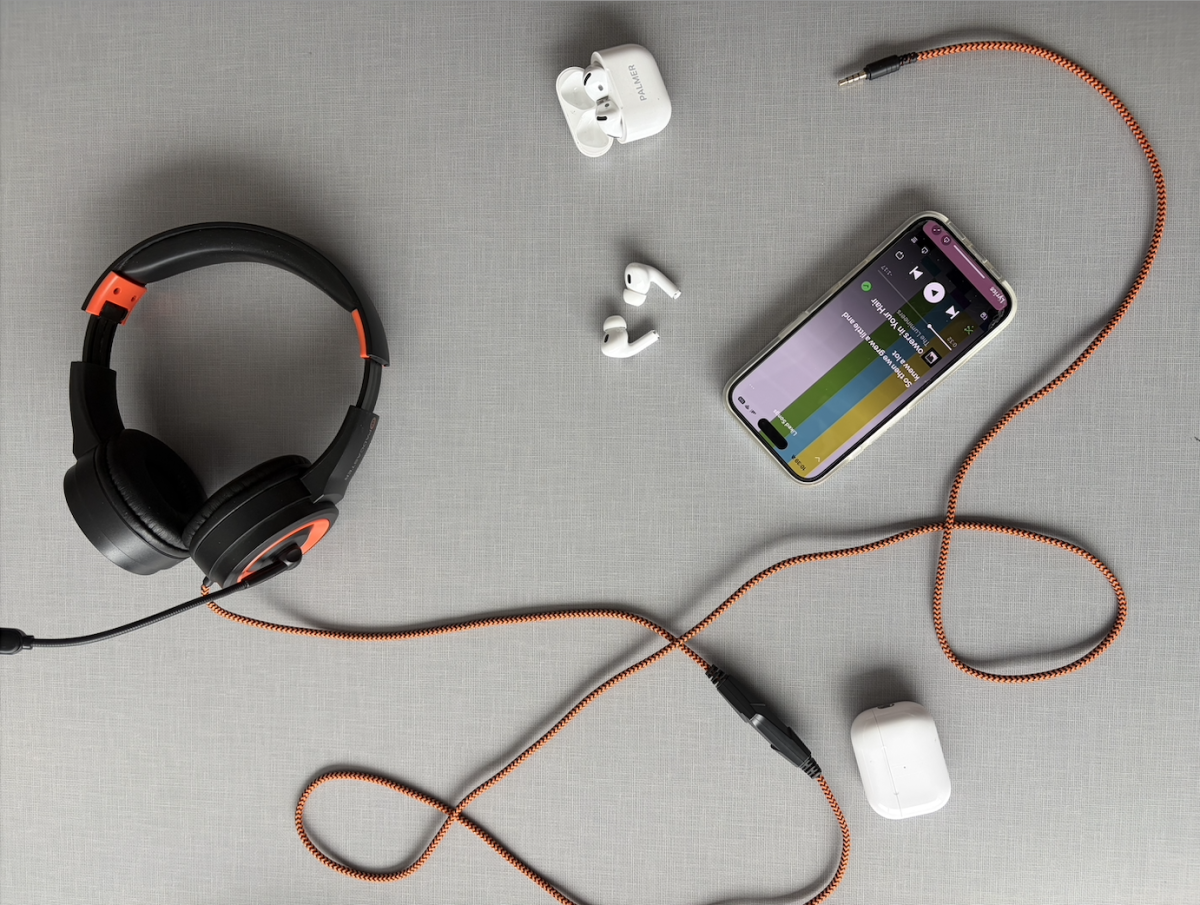
There used to be a time when silence was something natural and normal, not something that people felt like they needed to fill. It used to feel natural to sit in silence while in the car, working out, or in the shower. People used to feel comfortable hearing their brain think. It wasn’t uneasy; it was just life. Now, we have become accustomed to constant noise everywhere. The hum of planes in the sky, the cars on the highway, and even the vibrations of home appliances.
Now, we rarely experience true silence. With phones, we constantly have access to not only social media, but also to music, e-books and podcasts. A huge reason why we avoid silence is that it feels uncomfortable; we’ve exchanged it for constant stimulation.
When it’s quiet, there’s nothing to distract us from our own thoughts – the ones we usually ignore. It can be overwhelming, so instead of sitting with them, we mute our thoughts. 63% of smartphone users check their phones within five minutes of waking up, with 88.6% checking within the first 10 minutes. Our phones have become an immediate mute button for the real world, providing a constant and permanent bridge between the silent gaps in our day.
The true loss is not sitting in silence, but losing your gut feeling. You start to rely on external input like influencers, immediate gratification, and songs to tell you how you feel instead of understanding it for yourself. When it is quiet, your brain examines your emotions, and ultimately, you become more regulated. If your brain can’t ever check in, you miss your body’s warning signs, like clenched jaw, stiff shoulders, tension, etc. You lose touch with your mood.
In a study conducted at Duke University by Professor Imke Kirste, mice were exposed to different sounds for 2 hours a day: white noise, Mozart’s classical music, and pure silence. This study measured cell growth in mice’s brains, and Kirste concluded that the most cell growth happened when the mice were exposed to pure silence.
Silence enhances creativity, boosts focus, reduces stress, and helps us connect with others and ourselves. Silence is essential for human development. In order to get the silence our bodies crave, notice when you replace your thoughts with outside sound, and instead of that replacement, sit in the silence.