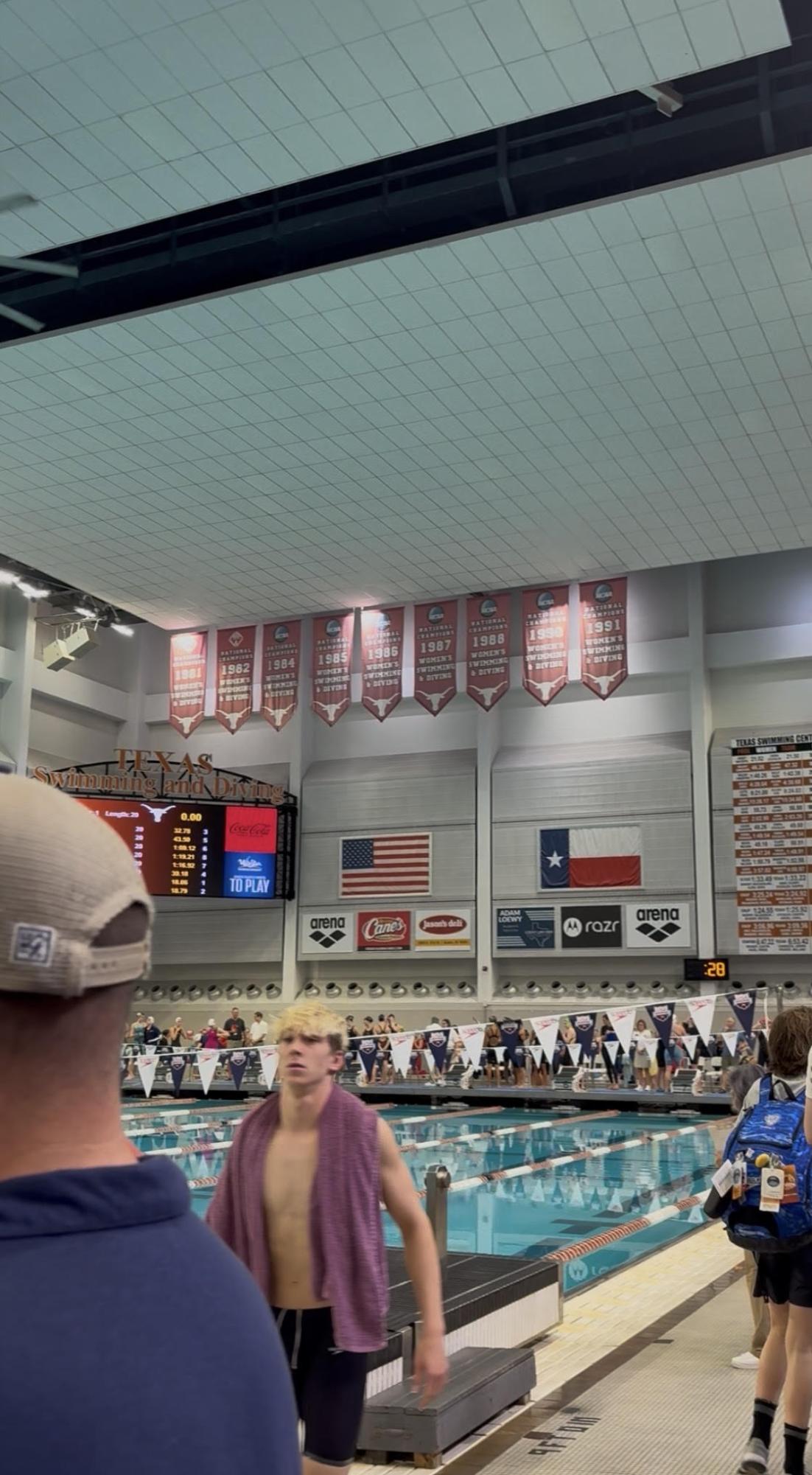
As the winter swim season comes to an end, many club swim teams around the country venture to championship meets around the country to compete in a final competition. The Aspen Swim Club set its sights on a championship meet in Federal Way, Washington, called Speedo Sectionals. But a few weeks later, the team received an email about the meet’s cancellation. This sudden decision highlighted the growing conflict between the regulations adopted by athletic governing bodies and state and local laws. The cancellation only happened in Washington, while every other sectional meet in the country will proceed as planned.
USA Swimming has adopted competition policies aligned with the US Olympic and Paralympic Committee, along with the February 2025 federal executive order “Keeping Men Out of Women’s Sports.” It turns out that there is a conflict between these policies and the laws of the state of Washington and King County, where the Weyerhaeuser Aquatic Center is located. Washington’s state laws prohibit discrimination of gender, while other state laws, called the “Kings County Code,” prohibit discrimination in public places, including pools, which conflicts with the ability to run swim meets.
The Washington State Law Against Discrimination protects people from discrimination in areas such as employment, housing, public accommodations, and insurance, while the King County Code prohibits this discrimination in public places. In contrast, USA Swimming has policies under the National Olympic and Paralympic Committee that restrict transgender women from competing in the women’s category unless they meet specific eligibility requirements. This policy is intended to ensure competitive fairness through excluding transgender athletes from women’s sports. As a result, these rules conflict with Washington’s anti-discrimination law and have caused controversy, particularly in the state of Washington, about the ability to host swim meets.
There have been many examples of this happening all around the state, but it has occurred in Washington for a long time, specifically at the Weyerhaeuser Aquatic Center. Although the law prevents the meet from being officially sanctioned, it is still possible to hold an “observed” meet that is not run by USA Swimming. This new meet still allows athletes time to count as official times. These restrictions argue that these measures are essential to preserving the integrity of biological genders in competitive sports. Conversely, groups want to maintain that true fairness can be achieved through the inclusion and protection of all athletes. While this may serve as a short-term solution, it does not resolve the legal and ethical conflict between these laws. Ultimately, the situation needs clearer policies that balance fairness in competition with protections against discrimination.