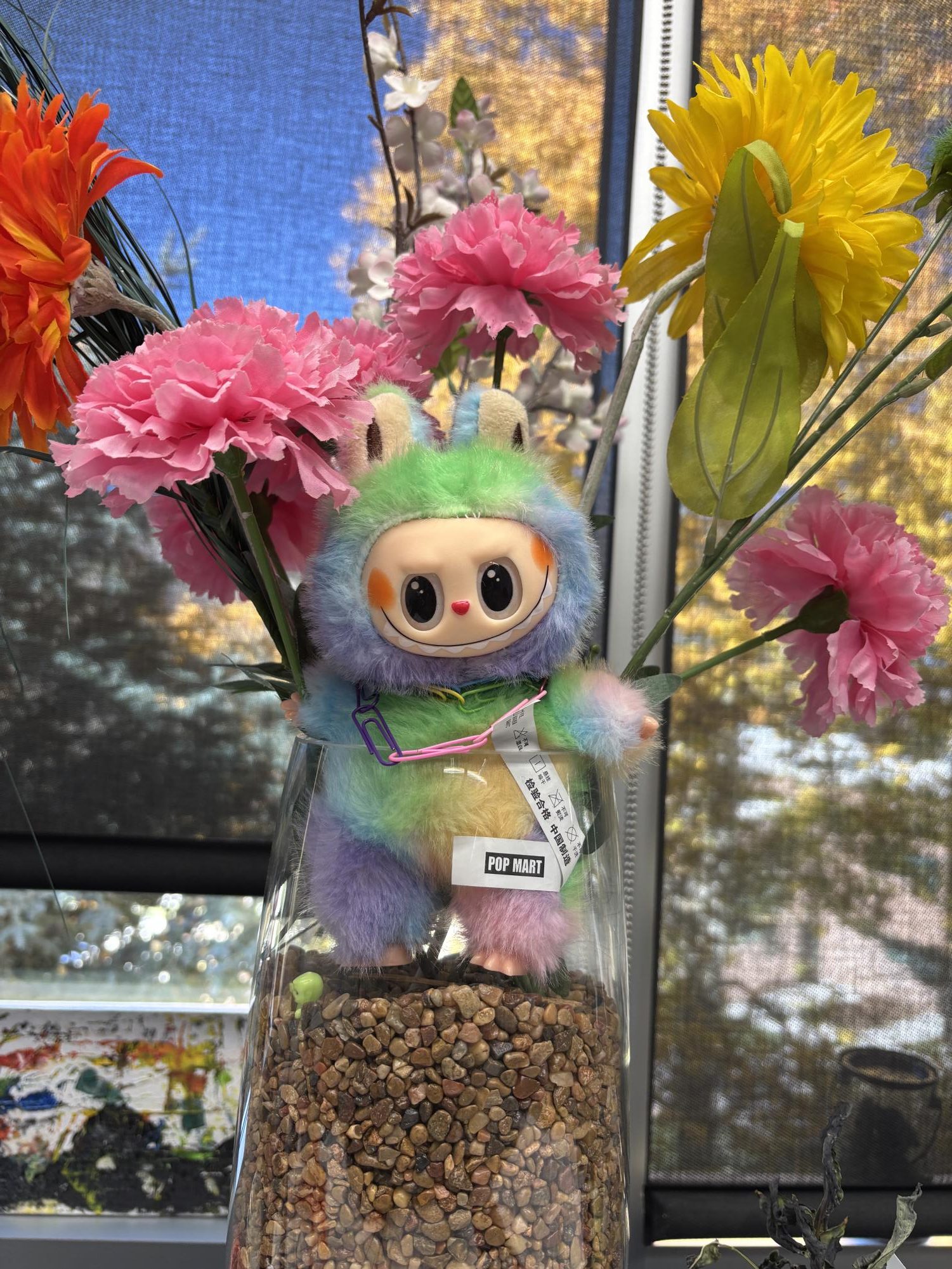
Many were shocked by how popular the infamous Labubu has become; however, people have been obsessing over “ugly-cute” things for generations. Over the past few months, the world has been taken by storm by plush “creepy-cute stuffed rabbit-demon-elf-bear…Labubus,” said Wired, the magazine.
The collectables sold by PopMart were even showcased front row at Milan Fashion Week and are seen all over the internet, as well as in AHS classrooms. In practice, Labubus are decorative keychains that can be hung from backpacks, clothes, and other fashion items.
The dolls have been around for almost 7 years and are just now gaining popularity. Originally, Labubus were the main characters in artist Kasing Lung’s 2015 story book Little Monsters, which follows a group of female elves, based on Nordic Folklore.
Their lack of purpose and unconventional look has many people wondering why they are so lovable. Some attribute the success of the dolls to celebrity support. Labubus have been seen hanging off of some of the world’s biggest names, such as Dua Lipa, Rihanna, and multiple members of the K-pop group BLACKPINK.
Labubus have also latched onto the viral trend of “blind boxes.” PopMart is one of the main employers of the blind box strategy. Products are sold unlabeled in bags or boxes of solid colors, so it’s always a mystery what the customer will receive. PopMart also includes a “mystery” labubu in their special collections that is not displayed on the side of the box. This means there are two mysteries involved: which labubu the customer will get, and if they will get to find out what the “mystery” one looks like.
When a customer is opening a blind box, dopamine is released, which further adds to their enjoyment of the product and even in some cases, results in addiction to the buying and opening of blind boxes. Dopamine is a key part of the brain’s reward system and is released when a person feels suspense and anticipation.
Labubus tap into the idea that unappealing things can be cute too. Every generation has its own version of the Labubu. The children of the 1980s and 1990s had Troll Dolls. These dolls were roughly four inches tall, made of hard plastic, typically naked, and often unattractive, with tall synthetic hair sticking straight up out of their heads, which was roughly the same length as them. High schoolers today might not remember Troll Dolls, but they most likely remember Furbys. The disturbing owl-like animatronics were incessantly advertised all over children’s shows.
The phenomenon of people finding ugly things as “cute” goes back to evolutionary psychology and something called the “Baby Schema”. Humans evolved so that a parent’s body will be flooded by the hormone Oxytocin when they see their baby. This hormone causes them to love their offspring and find them cute. That attraction then prevents the parents from harming the baby. As a result, humans find objects with similarities to babies, such as small or exaggerated features, to be cute.
Labubus are small and can be easily held in one hand, and they have huge eyes, similar to those of a baby. Therefore, the Labubus’ “ugly” features are similar to those of a baby, and humans are evolutionarily predisposed to find Labubus cute. Since Labubus are popular amongst idols and use psychological tricks in their packaging and design, it is really no wonder they have become the next big craze.