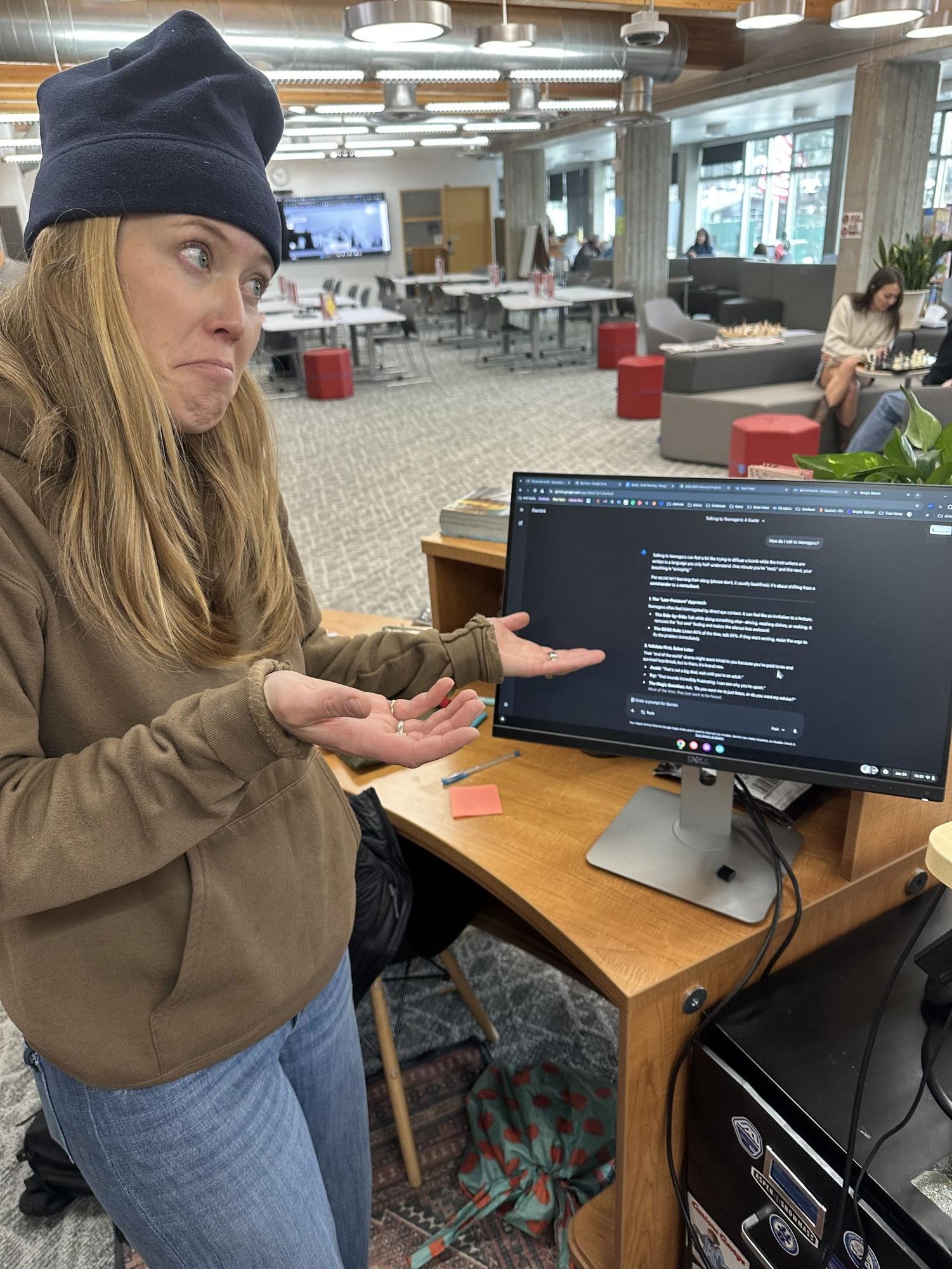
Artificial intelligence is no longer a “future” concept that we can brush off to the side; it’s the present, and it’s everywhere. We see it in classrooms, advertisements, social media, and even the music industry. The question we need to ask ourselves is how we use AI in a productive and integral way.
AI has been a controversial topic ever since teachers learned about students copying and pasting ChatGPT’s work into their assignments in early 2023. From enhancing healthcare to students cheating on schoolwork, all the way to environmental impacts, AI has its ups and downs, but here’s how to properly utilize this tool in school:
Teachers:
Do’s:
Use AI to help you lesson plan new and fun activities and different ways of teaching.
AI assistance here can help you save time without replacing your role as a teacher. Teach your students how to use AI. Teach how it works, its values and limitations, its ethical concerns, and how to use it responsibly in and out of the classroom.
Be transparent when you use AI. Being open about your use of AI can help students understand when to use it and build trust and bonds between students and teachers.
AI can help you create grading rubrics. AI-generated rubrics can help ensure your rubrics are fair, consistent, and transparent when grading all students.
Don’ts:
Try not to use AI to create assignments or tests for students; it’s unethical and can provide flawed information. However, with proper analyzing by humans to ensure accuracy can be a good starting point.
Don’t use AI to grade work for your students either. AI can miss key information or make serious mistakes.
STUDENTS:
Do’s:
Let AI help you brainstorm when you’re stuck. AI is a highly efficient and productive way to brainstorm, being able to quickly bounce ideas back and forth. Treating AI usage as a conversation is a highly effective way of using it because chatbots excel at matching tone.
Paste your (already completed) work into your school-funded Gemini account and let it edit your work for things like grammar, clarity, word choice, and spell-checks.
Use AI as a tutor. AI can explain new concepts, walk you through different examples, or help you review material for a test. An awesome AI tutor is Revision Dojo, which has excellent resources for IB classes and practice questions.
Cite your AI usage. If you cite AI, you’re being honest and accountable, just like citing any other source. If unsure how to cite, make sure to clarify with your teacher without just guessing!
Don’ts:
Don’t use AI to do full assignments for you. Turning in AI-generated work impacts your own learning and academic integrity. This can also break bonds and trust you may have with teachers and administrators.
Don’t let AI replace your own critical thinking skills. If AI is creating, analyzing, and doing all of your work for you, you are missing out on the most important part of any assignment: building critical thinking skills. It’s why you’re a student.
AI isn’t something we can ignore, but it can be used with certain caution. AI is best used when students and teachers use it responsibly. If there are clear expectations for use, AI can be used in ways that protect academic integrity and transparency. Practicing these steps helps prepare students for a future where AI will be unavoidable in all aspects of their lives.