












When I get bored, I often find myself going through the five hundred emails from the New York Times I receive daily. It normally makes me feel connected to the world and educated on issues happening in real time. However, it’s recently left me feeling less connected than ever. I increasingly find myself disheartened after reading about attacks on synagogues and Jewish communities.
Currently, 91% of Jews in the United States report feeling uncertain of their safety due to antisemitism. This number has dramatically increased since October 7th, 2023, the day when Hamas attacked Israeli citizens at a music festival. 1,200 people died, and upwards of 240 were taken hostage. The retaliation from Israel was heavily criticized when the conflict escalated into war.
After the recent strikes on Iran by Israel and the US, there has been significant criticism directed at Jews around the world. These effects are often fueled by misconceptions and hatred for a community that people do not understand. With more anti-Israel sentiment growing, Jews worldwide can’t seem to escape the consequences.
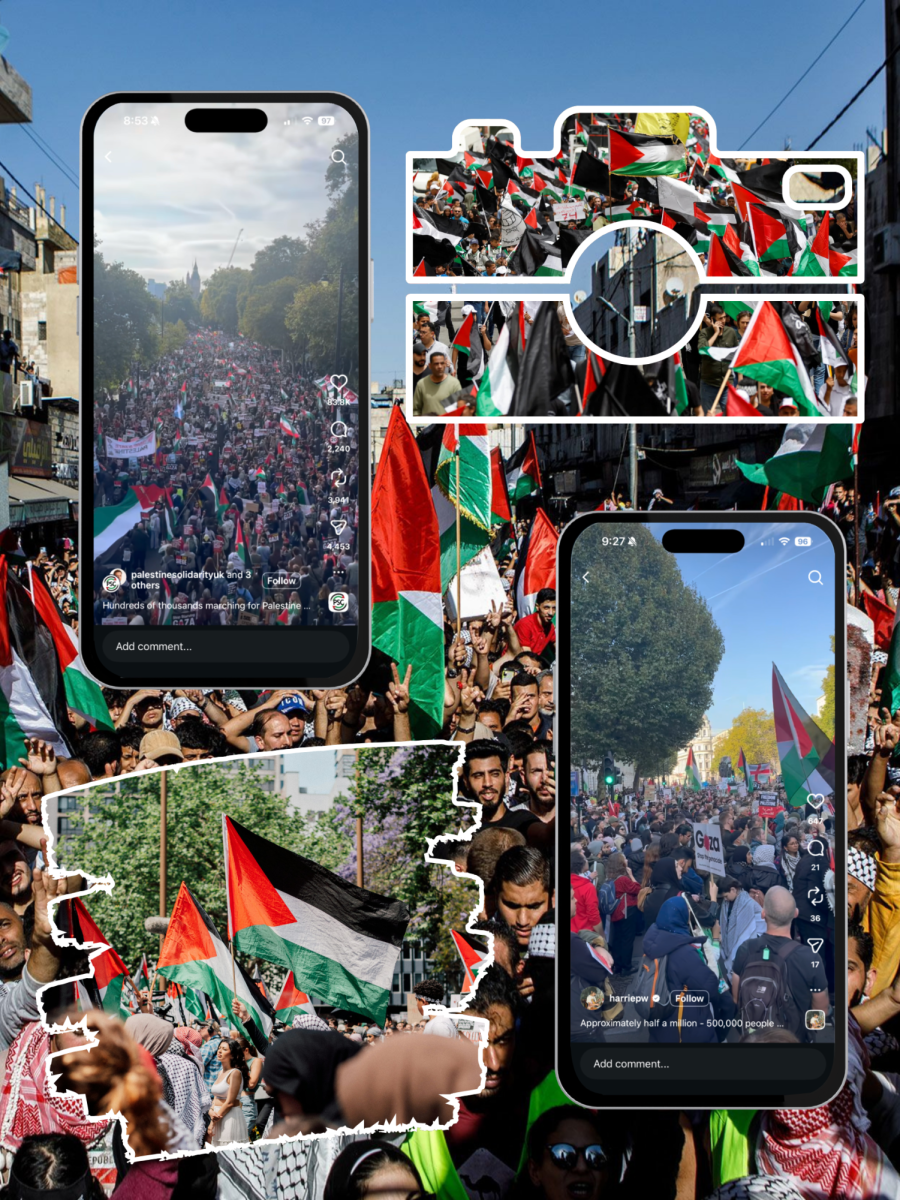
Many anti-Semitic narratives are perpetuated on social media. On TikTok, there has been a significant rise in anti-Israel and pro-Palestinian content, which has enabled a platform for Jewish hate. Social media is not a credible source; news consumption solely from such platforms leads to misinformation. It is especially important to consider multiple perspectives when forming opinions on complex issues like this conflict.
Along with the increased misinformation on social media, the meaning of Zionism has been entirely misconstrued. It is often portrayed as supporting the current Israeli leaders, occupation, and what many view as the tolerance of mass murder. In reality, it is none of the above.
Zionism is simply “the movement and belief that Jewish people have a right to self-determination and a homeland in their ancestral land.” The term has become incredibly stigmatized and lost its true meaning. After World War II, leaders deemed it necessary for the Jewish people to have a place for true safety along with self-determination. This came with Israel’s high security practices, considering their historical persecution dating back thousands of years.
It is also important to acknowledge that not all Jews are Israeli; some aren’t even supporters of the Zionist movement. The Jewish people are a group often classified as ethnoreligious, meaning that Judaism is both an ethnicity and a religion. Being Israeli, on the other hand, is a nationality determined by citizenship in the state of Israel. Israel has been the religious homeland of Judaism for more than 3,750 years, and consequently, the Jewish people have strong ties to that land.
Regardless, following attacks in Gaza and the wars in the Middle East, it seems that Jews are consistently blamed. This is evident through shootings, cars driven into crowds, and even the placing of explosives on Jewish schools.
Attacks on synagogues are not a new occurrence, and have been growing in frequency since World War II and the subsequent creation of the Israeli State. In the 1960s, Alabama’s Beth Israel Synagogue had a celebration for the newly installed Sunday school rooms, where students could practice Judaism and learn Hebrew. Midway through the celebration, a 16-year-old threw an explosive into the crowd. This is widely regarded as one of the worst anti-Semitic attacks in U.S history.
Most recently, there were attacks on synagogues in Michigan, Belgium, and a synagogue ambulance was set on fire in London. These are just a fraction of the events that have occurred since the war began with Iran.
In March 2026, four teenagers sent explosives into a Dutch synagogue, causing damage to the building. This was days after explosives were thrown at a Jewish school in Amsterdam. These actions are increasingly reminiscent of the attack in the sixties, as we seemingly regress into a less inclusive world.
Some attacks aren’t even physical, just small verbal comments meant to degrade practitioners of the religion. I have personally experienced these comments, and it is hard to find a Jewish person who hasn’t; the American Jewish Committee reported that nearly a third of American Jews experienced some form of antisemitism in 2025. From assumptions of my stance on the war in Gaza, to whispers of me being “ew, a zionist” from people I hadn’t spoken to in years, it seems that most of the incidents were created by a sheer lack of empathy or curiosity towards other perspectives.
For these reasons, organizations such as the Blue Square Alliance have been formed. This organization focuses on decreasing the spread of misinformation. Using the symbol of a blue square, it brings people together to stand up to hate towards Jewish citizens.
Regardless of support for the war in Gaza, with violent anti-Semitic attacks reaching an all-time high, the hate must be addressed. The attacks come as close as Boulder and are enacted by people younger than the age of eighteen. Anyone can perpetrate attacks on a small or large scale, which is why it is increasingly important to understand conflicts before forming an opinion. Look at issues from multiple viewpoints, and understand the distinction between Israel and Judaism. Since WWII, the Jewish people have used the slogan “never again”, but it is hard to prevent a war of hatred when it is fueled by allowed ignorance.